
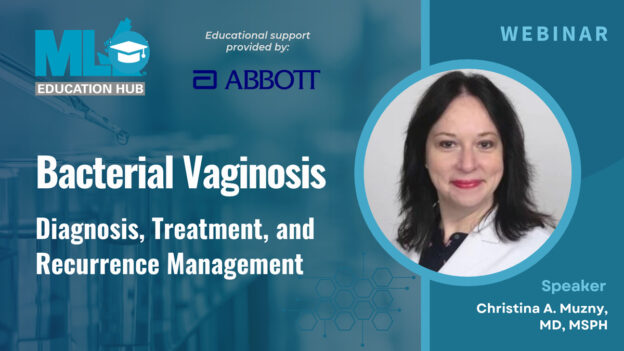
Date: December 1, 2026 | 1:00 PM EST / 12:00 PM CST
Duration: 1 Hour
Credits: 1
Presenter: Christina A. Muzny, MD, MSPH
Sponsor: Abbott
Cost: Free
Bacterial vaginosis (BV) is the most common cause of vaginal symptoms among reproductive-aged women and remains a significant clinical challenge due to its high prevalence, association with adverse health outcomes, and frequent recurrence following treatment. Despite advances in our understanding of the vaginal microbiome and BV pathogenesis, controversies and knowledge gaps remain regarding optimal diagnosis, treatment selection, management of co-infections, and approaches to recurrent disease.
In this educational webinar, Dr. Christina Muzny, a recognized expert in vaginal infections and women’s health, will provide a comprehensive review of the current state of bacterial vaginosis management. Participants will gain practical insights into the epidemiology and burden of disease, including the impact of BV on patient quality of life and reproductive and sexual health outcomes.
The session will explore the diverse clinical presentations of BV and review current evidence regarding its relationship with sexually transmitted infections (STIs), including common co-infections encountered in clinical practice. Attendees will also receive an evidence-based overview of available treatment options and current guideline recommendations, with discussion of management considerations when BV occurs alongside other infections.
Additional topics will include strategies for managing recurrent BV, emerging perspectives on partner management, and the challenges clinicians face when caring for patients with persistent or relapsing symptoms. The webinar will conclude with a brief overview of current diagnostic approaches and their role in supporting accurate diagnosis and patient care.
Key takeaways include:
- Understanding the epidemiology and clinical burden of BV
- Recognizing the association between BV and common STIs/co-infections
- Applying current guideline-recommended treatment approaches
- Evaluating management strategies for recurrent BV
- Comparing available diagnostic approaches and their clinical utility
Whether you are a clinician, laboratory professional, or healthcare practitioner involved in women’s health, this webinar will provide practical, evidence-based guidance to support informed decision-making and improve patient care.
Register today to enhance your understanding of bacterial vaginosis and the evolving approaches to diagnosis and management.
Learning Objectives
At the conclusion of this webinar, participants will be able to:
- Describe the epidemiology, burden of disease, and clinical significance of bacterial vaginosis.
- Explain the clinical presentation of bacterial vaginosis and its associations with sexually transmitted infections and co-infections.
- Evaluate current guideline-recommended treatment options for bacterial vaginosis, including management considerations in the presence of co-infections.
- Analyze evidence-based approaches for recurrent bacterial vaginosis and partner management.
- Compare available diagnostic approaches for bacterial vaginosis and their appropriate use in clinical practice.
About the Presenter

Christina A. Muzny, MD, MSPH, is a Professor of Medicine in the Division of Infectious Diseases at the University of Alabama at Birmingham (UAB). She is the Medical Director of the UAB Vaginitis Clinic and serves as President-Elect of the Infectious Diseases Society for Obstetrics and Gynecology (IDSOG). Her clinical and research interests focus on vaginal infections, particularly bacterial vaginosis and trichomoniasis, with the goal of improving diagnosis, treatment, and prevention strategies. Dr. Muzny has authored numerous peer-reviewed publications and is internationally recognized for her contributions to advancing the understanding and management of bacterial vaginosis. Through her research, clinical practice, and educational activities, Dr. Muzny has become a leading voice in women’s infectious diseases and vaginal health.
Supported in part through an unrestricted educational grant by:

Course Includes
- 1 Lesson
- Course Certificate

Medical Laboratory Observer (MLO) is approved as a provider of continuing education programs in the clinical laboratory sciences by the ASCLS P.A.C.E. ® Program.
Level of Instruction: Intermediate
Passing scores of 70 percent or higher are eligible for 1 contact hour of P.A.C.E. credit. This test is no longer valid for CEs after November 30, 2027.