
Date: February 11, 2026 | 1:00 PM EST / 12:00 PM CST
Duration: 1 Hour
Credits: 1
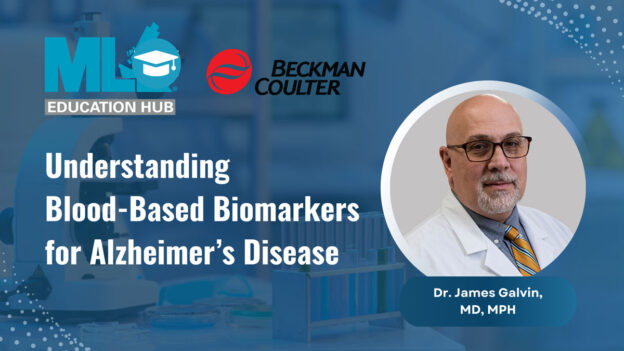
Presenter: Dr. James Galvin, MD, MPH
Sponsor: Beckman Coulter
Cost: Free
Blood-based biomarkers (BBMs) are rapidly emerging as a practical and minimally invasive tool for improving Alzheimer’s disease (AD) diagnosis and patient care. This webinar will provide laboratory professionals with an in-depth look at the science behind BBMs, including key markers such as p-tau217, Aβ42/40, neurofilament light (NfL), and GFAP, and their integration into the AT(N) diagnostic framework. We will examine assay performance, analytical considerations, and the advantages and limitations of plasma-based testing compared to CSF and imaging modalities. Attendees will gain actionable insights into current and future applications of BBMs in clinical workflows, regulatory status, and how these innovations can support accurate, cost-effective testing in diverse laboratory settings.
Learning Objectives
At the conclusion of this webinar, participants will be able to:
- Identify practical considerations for integrating BBM testing into laboratory workflows, including regulatory status and implications for clinical decision-making.
- Explain the role of blood-based biomarkers (BBMs) such as p-tau217, Aβ42/40, NfL, and GFAP within the AT(N) diagnostic framework for Alzheimer’s disease.
- Compare the analytical performance, advantages, and limitations of plasma-based biomarker assays with CSF and imaging modalities in clinical laboratory settings.
About the Presenter
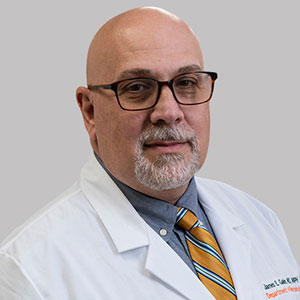
Dr. James Galvin is the Founding Director of the Comprehensive Center for Brain Health and Professor of Neurology and Professor of Psychiatry and Behavioral Sciences at the University of Miami School of Medicine. He is a board-certified Neurologist and Chief of Cognitive Neurology Division. Previously, Dr. Galvin served on the Faculty at Hahnemann University, Washington University in St Louis, New York University, and Florida Atlantic University. He is Director and Principal Investigator of the Lewy Body Dementia Association Research Center of Excellence, one of 25 Centers in the United States.
Supported in part through an unrestricted educational grant by:

Course Includes
- 1 Lesson
- Course Certificate

Medical Laboratory Observer (MLO) is approved as a provider of continuing education programs in the clinical laboratory sciences by the ASCLS P.A.C.E. ® Program.
Level of Instruction: Intermediate
Passing scores of 70 percent or higher are eligible for 1 contact hour of P.A.C.E. credit. This test is no longer valid for CEs after February 10, 2027.